Headphones On, World Off: The Silent Disco Stars Taking Over 2026’s UK Nightlife
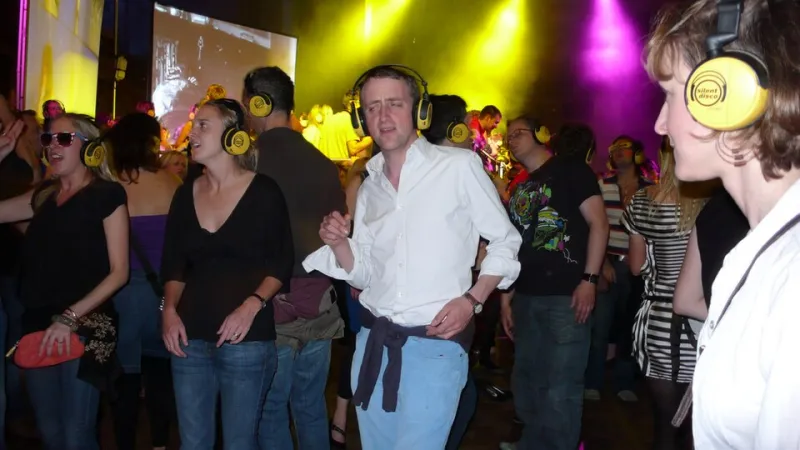
Photo: Underbelly Limited, CC BY-SA 2.0, via Wikimedia Commons
Silent discos used to be a novelty: a wedding icebreaker, a festival sideshow, a chance to watch your mate belt out ABBA while the field stays quiet. In 2026, they have become something else entirely — a blueprint for the celebrity party. UK stars are hiring headphones, booking unusual venues and inviting fans to raves where the only sound is a thousand people singing slightly out of time. And yes, the queues are real.
Why Stars Are Turning the Volume Down
The appeal for artists is obvious. A silent disco is intimate without being tiny. It can pop up in a warehouse in Hackney, a rooftop in Leeds or a former department store in Birmingham without upsetting the neighbours. It gives the star control: they can DJ, host, wander through the crowd or slip out early. It also looks brilliant on social media. A room full of people dancing to nothing is inherently strange, and strange clips travel.
For rising stars, the format is a shortcut to buzz. An album launch does not need a massive PA and a licensing headache; it needs 300 fans, a playlist and a queue that snakes around the block. TV personalities and TikTok creators are using the same trick for meet-ups and wrap parties. The headphone-only rule also solves a very modern problem: how do you throw a party that feels exclusive without making it feel like a corporate event? Headphones make everything feel like a secret.
The Queue Outside the Coolest Room in Britain
On a cold November night, the queue is part of the experience. Fans arrive early, compare playlists and speculate about which channel the star will be on. Inside, the dancefloor is split into colour-coded channels: pop, R&B, throwback, maybe a chaotic whatever-the-host-feels-like option. Strangers share a nod when a favourite comes on. Someone starts a chant. Someone else films it for TikTok.
The reaction from fans has been mostly giddy. Silent discos feel friendlier than a standard club: you can hear your friends, you can take your headphones off if it gets too much, and you do not have to shout over a bassline that is rearranging your organs. For neurodivergent fans or anyone who finds normal gigs overwhelming, that is a genuine plus. It is also, frankly, a great story. I danced in silence with my favourite singer is a better anecdote than I stood at the back and saw a screen.
Inclusive Rave or Exclusive Flex?
Here is where it gets complicated. A silent disco can be more accessible, but it can also be more expensive. Headphone hire, ticketing and a trendy venue all add up. Guest lists still exist. Invite-only links still circulate in group chats. The format may lower the volume, but it does not automatically lower the barrier. If anything, the novelty can become a new kind of flex: not just I was there but I was there, with the right headphones, in the room before the room got cool.
The best versions of the trend feel genuinely communal. The worst feel like exclusivity with a gimmick. Stars who use the format to create a safe, playful space for fans are doing something interesting. Stars who use it to make a standard VIP party look quirky are doing something else. The difference is usually in the details: ticket prices, accessibility, whether the fan community gets a real look-in or just a queue.
The Morning After the Night Before
Silent disco parties are probably here to stay. They are flexible, photogenic and weird enough to cut through a crowded culture. For UK nightlife, they offer a way to throw a party without a noise complaint. For stars, they offer intimacy and control. For fans, they offer a story and a pair of headphones that smell faintly of someone else's hair.
But the trend will only stay interesting if it stays honest. If every celebrity party becomes a headphone-only invite, the novelty will wear off and the velvet rope will feel even more obvious. For now, though, there is something genuinely lovely about a room full of people singing the same chorus in silence. It is inclusive, exclusive and slightly ridiculous all at once — which is probably exactly why 2026 cannot get enough.